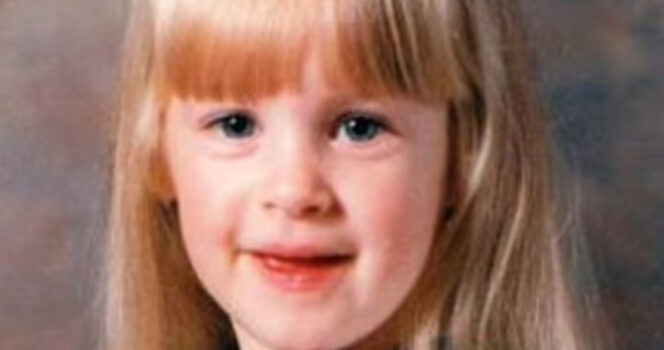
She looks like any other child. The kind who might grow up to become a teacher. A doctor. Someone who helps people.
She became a nurse.
And for years, that’s exactly what people believed she was.
Parents trusted her with their most fragile newborns — babies fighting to survive their first days of life. To them, she was a caregiver. A protector. Someone standing between life and loss.
That trust would come at a devastating cost.
A normal life — on the surface
When this little girl was born in 1990, she was just like most girls growing up in Hereford. By all accounts, she had an ordinary and happy upbringing. Nothing stood out. Nothing raised concerns.
She was the only child of a furniture salesman and an accounts clerk, and there was nothing particularly remarkable about her parents either.
As she grew older, she went on to study nursing at the University of Chester, graduating in 2011. Soon after, she began working as a registered nurse in the neonatal unit at the Countess of Chester Hospital.
Colleagues described her as kind and dedicated. She wore bright scrubs, remembered patients’ names, and seemed deeply passionate about caring for premature and sick babies. She even bought a house near the hospital and participated in a fundraising campaign for a new neonatal unit.
No one suspected what was coming.
When something didn’t add up
Between June 2015 and June 2016, something began to go terribly wrong.
In neonatal units, loss is sadly not uncommon. These babies are incredibly vulnerable. But this was different.
The number of deaths wasn’t just high — it was extraordinary

Cheshire Constabulary
Doctors began noticing a pattern. Sudden collapses. Unexplained deteriorations. Babies dying without a clear cause. Stephen Brearey, the lead neonatologist, followed his training and carefully looked for a pattern. He identified a common link — a nurse named Lucy Letby had been present during every incident.
Concerns were raised as early as 2016, but hospital leadership was slow to respond. Doctors pushed harder, warning that something wasn’t right. Some were even told to stop pointing fingers.
It wasn’t until 2017 that police were finally contacted.
By then, it was believed that 17 babies had already been harmed or killed.
The crimes
What investigators later described was almost impossible to comprehend.
Prosecutors alleged that Lucy Letby injected air into babies’ bloodstreams, overfed them milk, and poisoned them with insulin, often while their parents sat just feet away, holding their tiny hands and believing nature was to blame.
Seven babies died. Ten more were seriously harmed.
Some were only hours old.
One family lost twins.
Lucy was also accused of targeting some babies more than once.
Jurors were told she kept notes connected to the deaths. One Post-it note found in her home read:
“I am evil, I did this,”
She denied all of it.
Inside the courtroom
Lucy Letby’s trial began in October 2022 at Manchester Crown Court and lasted nearly a year — becoming one of the longest and most complex cases in British legal history.
The court heard from hundreds of witnesses. Medical experts described injuries that could not be explained naturally. Parents relived the moments they lost their children.
Throughout it all, she sat quietly, showing little emotion. She did not testify in her own defense.
Police described Letby as “vanilla” because, on the surface, she appeared completely harmless. She was a plain, single woman who attended salsa classes with friends and returned to a suburban home decorated with twinkling lights. Her bedroom was filled with Disney-style stuffed animals, and she slept under a duvet featuring the equally childlike phrase, “Sweet Dreams.”
On August 17, 2023, after 22 days of deliberation, the jury reached a verdict.
She was found guilty of murdering seven babies and attempting to murder six others. She was sentenced to a whole-life term and will never be released.
The judge described her actions as “calculated, cold-blooded,” and “cruel and pitiless.” Outside the courtroom, families broke down — some in grief, others in long-awaited relief.
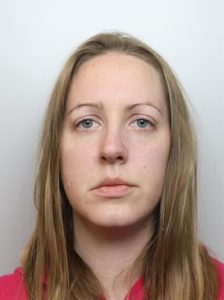
No clear motive was proven in court, and legally one was not required for a conviction. Prosecutors presented several possible explanations, including boredom, a desire for excitement, and “playing God.” They also claimed that Letby may have developed an inappropriate emotional attachment to a married doctor connected to some of the cases. This claim was supported by frequent text messages between them and a note discovered in her home that included phrases such as “I trusted you with everything and loved you,” “you were my best friend,” and “please help me.”
Letby denied having any motive and rejected the idea that she had a relationship with, or romantic feelings for, the doctor.
Questions that still remain
Even after the verdict, the case has not faded away.
A group of international medical experts later raised concerns about the evidence, suggesting that some of the deaths may have had natural causes.
In February 2025, an international panel of 14 experts led by Dr. Shoo Lee, a Canadian neonatologist, made a striking claim: they had “found no murders,” concluding that the deaths were more likely linked to natural causes or poor medical care.
Just months earlier, on July 2, 2024, the Court of Appeal had rejected all of Lucy Letby’s attempts to challenge her conviction, ruling that her arguments were “not arguable.” Then, in January 2026, the Crown Prosecution Service decided not to pursue additional charges related to nine more babies.
A 2026 Netflix documentary also examined the investigation and the lingering questions surrounding the case, using previously unseen footage and new accounts from those involved to shed fresh light on the case of Lucy Letby.