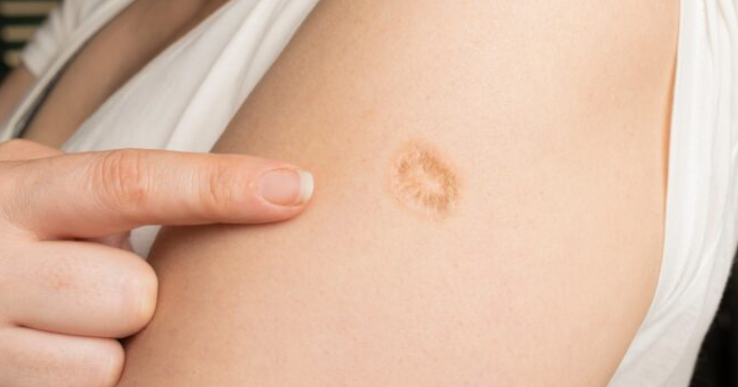
I have a clear memory of noticing a distinct scar on my mother’s arm when I was a child. It sits high up near her shoulder, appearing as a ring of small indents surrounding a larger one.
I couldn’t tell you why it caught my attention back then; I don’t remember. I only recall that it did, though like many things from childhood, I eventually stopped thinking about it.
Well, I didn’t forget it existed — it’s still right where it always was — but I did forget that I was once fascinated by what caused it. Maybe I asked my mother at some point and she explained. If she did, I clearly forgot that too.
That changed one summer a few years ago when I helped an elderly woman off a train and happened to notice the exact same scar in the exact same place. Naturally, my curiosity returned, but with the train about to pull away, I couldn’t exactly ask her about it.
So I called my mother, and she reminded me — apparently more than once — that the scar came from the famous smallpox vaccine.
Smallpox was a viral, infectious disease that once terrorized humanity. It caused a severe skin rash and fever, and during major outbreaks in the 20th century, killed an estimated 3 out of 10 people, according to the Centers for Disease Control and Prevention. Many survivors were left disfigured.
Thanks to widespread vaccination, smallpox was declared “extinct” in the United States in 1952. By 1972, the smallpox vaccine was no longer part of routine immunizations.
Up until the early ’70s, however, all children were vaccinated, and the shot left behind a very recognizable mark. Think of it as the earliest version of a vaccine passport: a scar that showed you had been successfully immunized.
And yes, that’s the very scar my mother has — just like nearly everyone else her age.
Why did the smallpox vaccine leave a scar? The smallpox vaccine caused scarring because of the body’s healing process. It was administered differently from most vaccines today, using a special two‑pronged needle.
The person giving the vaccine made multiple punctures in the skin — not just one — to deliver the vaccine into the dermis, the layer beneath the epidermis.

The virus in the vaccine then multiplied, forming round bumps. These bumps developed into vesicles (small, fluid‑filled blisters), which eventually burst and scabbed over.
The result is the distinctive scar we’re talking about.
Are you old enough to have a smallpox vaccine scar? Share in the comments.