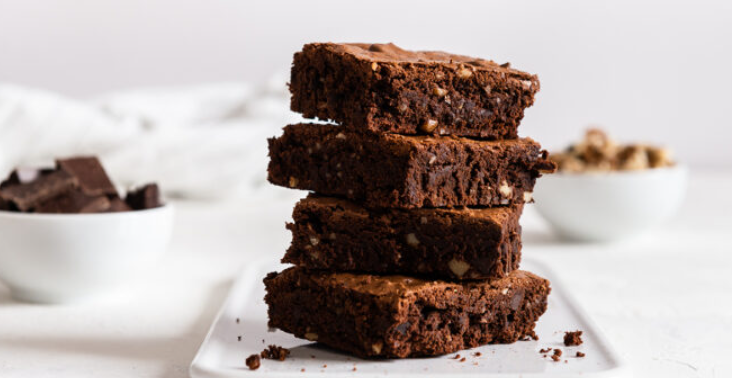
When Hannah Glass decided to eat a homemade brownie, she had no idea that days later, her parents would be picking up her cremated remains. The college student had always been cautious about her peanut allergy, but something hidden in the sweet treat killed her after only two bites.
Glass had turned 19 just two days earlier.
A community in Wisconsin is mourning the heartbreaking loss of Hannah Glass, a bright and compassionate freshman at Maranatha Baptist University who tragically lost her life after an unexpected allergic reaction to a brownie.
On November 5, the young woman, who had celebrated her 19th birthday two days before, suffered a violent reaction to a brownie she received from a friend. Hannah had a known peanut allergy and was usually careful, but she didn’t know the treat reportedly contained roasted peanut flour, an ingredient sometimes used as a gluten‑free alternative.
“The second bite, she knew something was wrong,” Hannah’s father, David Glass, told WISN. He explained that her friend brought the brownie from a women’s group on campus, and while it was made with peanut flour to accommodate gluten‑free students, it didn’t take into account those with severe peanut allergies.
“We believe because this product contained roasted peanut flour, separate from oily peanut butter, that masked this,” David continued. He and Hannah’s mother, Janean, raced about 45 minutes from their home in Milton, Wisconsin, to her residence in Watertown.
‘Right lung collapsed’
Hannah’s reaction was aggressive and immediate. Her father said she had thrown up, broken out in hives, and found some temporary relief with Benadryl.
But when she climbed up to her top bunk to rest, her condition changed drastically.
“When Hannah rolled on her side, the anaphylaxis reaction that we had not seen before hit incredibly hard. This caused her to gasp for breath, leading to the collapsing of the lung, further exacerbating the situation,” the grieving father wrote in a Facebook post shared November 11.
Hannah then climbed down the ladder from her bed and lost consciousness “part way down” — before her EpiPen could be administered.
“I picked Hannah up…and carried her outside to wait for the ambulance to arrive,” he wrote. “She was completely unresponsive, and I was incredibly helpless.”
Paramedics arrived and worked tirelessly to revive her, but Hannah’s heart had stopped for four minutes. She was rushed to Watertown Hospital and then transferred to Froedtert Hospital, where she was placed on a ventilator.
Brain ‘terminally damaged’
Her family watched helplessly as doctors fought to save her, but the damage was severe.
“The majority of her brain was unmistakably, seriously, critically, and without the life‑sustaining measures in place, TERMINALLY damaged,” David wrote on Facebook, describing the brain damage caused by several seizures that led to “severe brain swelling.”
“There were no conversations of quality of life or anything like that. This was only life and death!”
Despite the tireless efforts of medical professionals, Hannah’s brain suffered critical damage that left no hope of recovery.
‘Endless walk’
Before Hannah’s final goodbye on November 10, 2024, she was honored with a traditional “Honor Walk,” a touching tribute as she was taken to the operating room for organ donation.
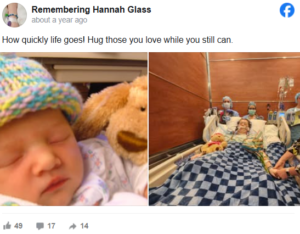
About 300 people lined the hallway for the walk, her family by her side until their “final goodbye.” “It seemed like an endless walk, yet it was also going too quickly,” David shared.
‘Good to have her home’
“We went and picked up Hannah’s cremated remains. It was and is a strange mix of emotions. There is still a strong sense of disbelief,” David wrote in a November 22, 2024 Facebook post. “Having now, this physical, tangible memorial of her physical life and body is nice, in one sense, because we now have something to see and to ‘hold on to,’ but it is also very sad because this is certainly not the same relationship that we had before. But, then again, it is good to have her home.”
Now her parents are urging people with food allergies to “Always be aware. Make sure your EpiPens are up to date,” David said.
Hannah’s organs have already saved four people who desperately needed lifesaving transplants.
Hannah Glass’s story is a poignant reminder of how fragile life can be and the importance of food allergy awareness. Her memory lives on not only through the lives she saved but in the hearts of those who knew and loved her.